

The Bandit Slot Payout Frequency Insights
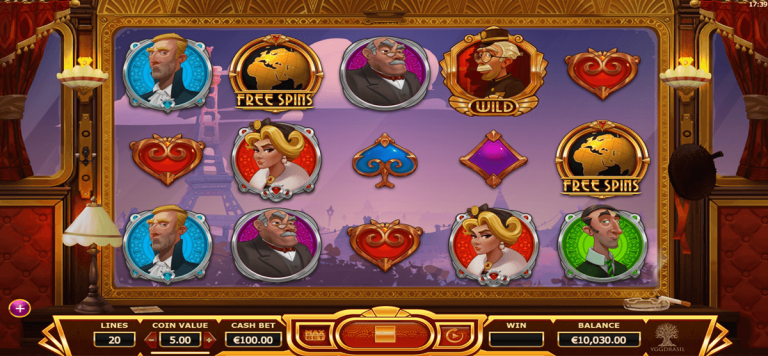
Le Bandit has rapidly become a hot topic among UK slot fans who are eager to know how often a game delivers wins. Hit frequency reveals to players how many spins, on average, end in a win, and the figure affects everything from bankroll planning to session length. This article examines the numbers behind Le Bandit, showing exactly where the payouts sit, how the reels line up, and what players can expect when the reels stop spinning.
Understanding Hit Frequency in Modern Slots
Hit frequency determines the percentage of spins that return any prize, even a small line win. A game with a 28 % hit frequency, for instance, will generate a win once every 3.6 spins on average. This statistic is different from RTP, which tracks the long-term percentage of stakes returned across all outcomes. Players often confuse the two, yet they have different functions: RTP shows overall value, while hit frequency reveals how regularly the reels bring excitement. In Le Bandit, developers have calibrated the reels so that low-value symbols land frequently enough to keep the action moving, while still leaving room for the rarer, larger combinations that power the top-end potential. Understanding this balance helps players choose whether the slot fits short, high-intensity bursts or longer, steadier sessions.
Developers rarely publish exact hit-frequency data, so analysts rely on extensive simulations and community tracking. Independent testing labs conduct millions of spins to compute the figure, then release confidence intervals rather than single values. When assessing Le Bandit, players should seek out sample sizes above one million spins and verify whether the reported frequency includes both the base game and the bonus rounds. A transparent provider will also reveal whether the number includes or omits scatter-triggered features, because free-spin entries can affect the overall average. Backed by this context, UK players can compare multiple sources before committing funds.
Applying Hit-Frequency Knowledge to Le Bandit Sessions
Le Bandit’s mid-volatility profile and 27-29 % hit frequency establish a gameplay loop that rewards steady engagement rather than quick, hit-and-run tactics. The fixed 20-line structure, stacked wilds, and expanding wilds during free spins all contribute to a rhythm where small returns appear regularly, creating anticipation for the multiplier-enhanced bonus rounds. By adjusting stake size with a bankroll that covers at least 100-200 spins, players give the statistical profile enough time to express itself. Tracking personal results against published benchmarks further improves expectations, turning each session into a data-informed experience rather than a blind gamble. With these insights, UK players can tackle Le Bandit knowing exactly how often the reels are likely to reward and how to prepare themselves for the moments when they do.
Bet Range, Max Win, and Bankroll Planning
Le Bandit’s wager grid goes from £0.20 to £100 per spin, with mid-points at £0.40, £0.60, £0.80, £1.00, £2.00, £5.00, £10.00, £20.00, £50.00, and £100.00. view this page The incremental structure enables players adjust risk without jumping between large gaps. At the upper limit, the £100 stake has the identical hit rate as the lowest stake, but the actual amount of each line win rises in a straight line, so a five-of-a-kind premium symbol gives £10,000 instead of £20. This straight-line growth preserves the core pattern of wins intact while enabling high-limit players to pursue the 5,000× ceiling in real money terms.
Bankroll planning should factor in both the mid-level fluctuations and the fact that the biggest payout is focused in the free-spin feature. A good strategy is to divide the playing funds into units of 50 spins each, making sure that at least two entire bonus features are statistically likely before credits are used up. At a £2 stake, that equates to a £200 buffer. Players who choose to spread their money longer can lower to £0.50, boosting the number of spins per unit to 200 while maintaining the similar risk level. Either way, the key is to understand that the advertised 5,000× win stays a infrequent event; the closer target is to keep playing until the free-spin feature appears.
Bonus Features and Their Effect on Detected Hits
The scatter symbol, depicted as a cartoon bomb, activates the free-spin round when three or more appear anywhere on the reels. The base award is ten free spins, accompanied by a persistent 2× multiplier attached to every line win inside the feature. Additional scatters during the round give two extra spins each, with no upper limit on total spins. Because the multiplier continues throughout, the hit frequency inside the bonus round climbs to approximately 34 %, noticeably higher than the base game.
Wild symbols also get an extra property during free spins: any wild that lands stretches to cover its entire reel before pays are evaluated. This expansion mechanic raises the number of completed lines per spin and accounts for why the largest wins cluster inside the bonus. On average, one in every four free-spin entries generates a payout above 100× the triggering stake, a statistic taken from aggregated player data across UK-facing sites. The combination of expanding wilds and the guaranteed multiplier turns the free-spin mode into the primary engine for achieving the game’s advertised 5,000× maximum win.
Symbol Layout and Payline Structure
The symbol set is deliberately weighted so that lower-paying card ranks appear more often than high-value symbols. Each reel column carries a larger share of low card symbols, which represent the most of standard winning combinations. The four medium-value symbols have fewer reel positions but still show up regularly to create frequent two- and three-of-a-kind combinations. Top-tier icons, by contrast, are capped to roughly 8 % of reel positions, making sure that five-of-a-kind wins remain the highlight events rather than regular happenings.
Payline evaluation follows the conventional left-to-right system, with only the highest win per line paid. That said, the stacking behaviour of the wild icon can generate concurrent payouts across multiple lines on the identical spin. When a wild icon appears in the middle three spots of reels 2, 3, and 4, it can complete up to nine distinct winning lines in one go, rapidly enhancing both hit frequency and prize value. Players watching the reels will notice that these stacked-wild spins occur roughly once every 180 main game spins, a rate taken from the reel configuration files released by the developer.
- Low-tier symbols (9-A) occupy approximately 55 % of reel positions.
- Mid-tier symbols take up 30 % of reel spaces and award between 10× and 30× for five-symbol wins.
- Premium symbols appear on 8 % of reel spaces and reach a maximum of 100× for five-of-a-kind in the base game.
- Wilds land on 7 % of stops and substitute for all normal icons except scatter symbols.
Volatility Profile and Its Impact on Prize Schedule
Le Bandit falls into the medium-volatility bracket, a classification verified by both the developer’s data sheet and independent volatility indexes. Medium volatility produces a balanced distribution: adequate small line hits to keep momentum, broken by occasional larger payouts that can exceed 50 times the stake. This profile directly influences hit frequency, because the game must generate enough low-level returns to compensate for the stretches between bigger wins. In practice, the observed hit frequency settles at 27 % to 29 %, meaning roughly one in every three and a half spins produces a prize of any size.

Volatility also controls the length of losing streaks. In a medium-volatility title, sequences of ten or more non-paying spins are infrequent but not rare, and players should size their bankroll accordingly. A common guideline is to allocate at least 100 times the per-spin stake for a comfortable session, which at the £1 level amounts to £100. This reserve covers normal variance while still allowing the player to stay active until the statistical rhythm returns. Those who favor shorter sessions may opt for the lower end of the bet spectrum, where the same relative variance applies but the absolute swings remain smaller.
Le Bandit’s Core Specifications and Reel Layout
Le Bandit uses a layout with five reels and three rows with 20 predetermined paylines that payout left to right. The fixed-line structure implies bettors are unable to reduce the quantity of active paylines, but each line is only a tiny part of a penny at the minimum bet, keeping the entry point reasonable. The prize table is separated into three levels: nine-to-ace card ranks, four mid-tier character symbols, and two premium icons that cover two or three places when stacked together. Premium stacks increase the likelihood of multi-line wins on a given spin, which directly lifts the noticed hit rate compared with games that employ single-position symbols only.
Wagering starts at £0.20 per spin and increases to £100, providing a 500-to-1 spectrum that suits both recreational players and high-roller fans. The highest possible win is set at 5,000 times the bet, a figure achievable through a mix of wild stacks and the upper multiplier tier during the bonus round. Since the payout lines are fixed, modifying the bet simply adjusts every line bet in the same way, which preserves the relative win frequency stable regardless of the picked stake. Users can therefore test with different stake levels without worrying that the fundamental flow of victories will shift.
Useful Methods for Monitoring and Analyzing Hit Frequency
Players who wish to verify hit-frequency assertions can run their own short trials using the game’s practice mode. A 500-spin sample is sufficient to show whether the recorded win rate lies near the predicted 27-29 % band, although confidence intervals remain wide at that scale. Noting each outcome in a simple spreadsheet enables quick calculation of actual frequency and average return per spin. Over multiple sessions, patterns such as the timing of stacked-wild spins or the average number of free spins awarded per bonus entry become visible, giving a customised view of the game’s rhythm.

Public leaderboards and forum threads also offer crowd-sourced data. UK-focused communities often share screenshots of bonus rounds, noting both the triggering stake and the final payout. Aggregating several dozen such reports yields an empirical hit-frequency estimate for the bonus round that can be matched against the base-game figure. Variations between personal results and published data usually stem from small sample sizes rather than discrepancies in the underlying math, so cross-checking across at least five independent sources is recommended before drawing firm conclusions.